
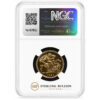
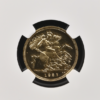

1937 George VI Gold Proof Sovereign NGC PF66+ Cameo
£8,995.00
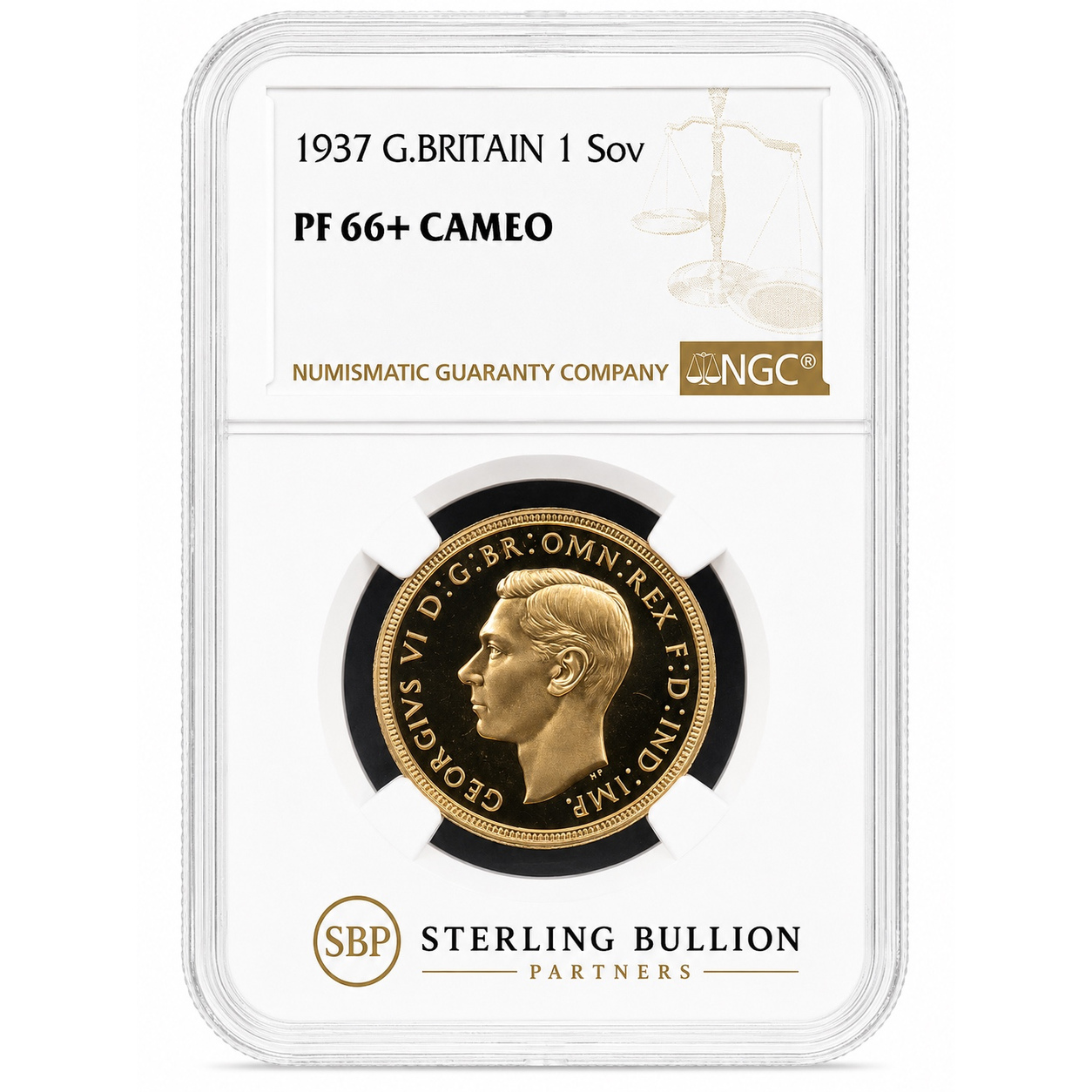
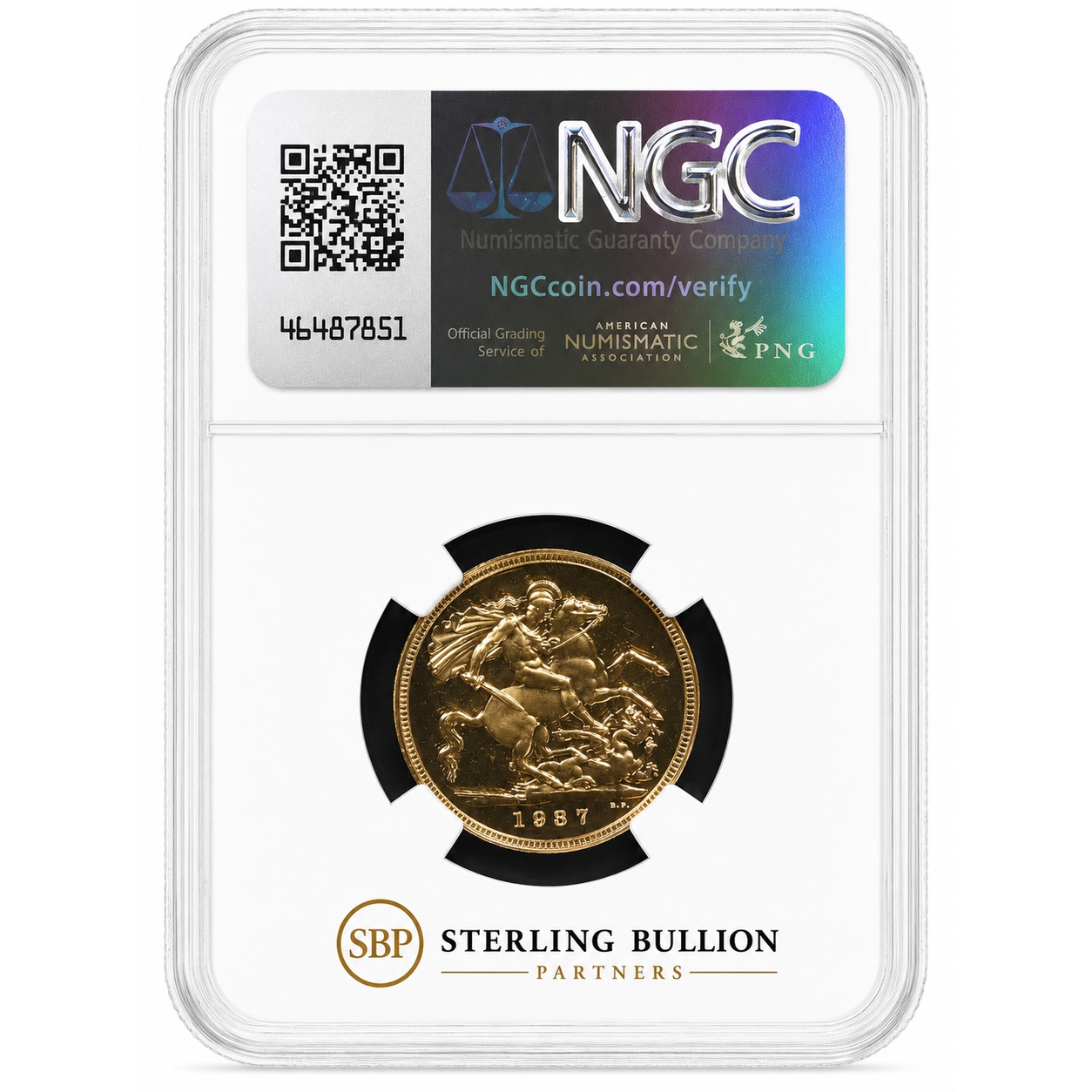
The 1937 George VI Gold Proof Sovereign was struck exclusively for the King’s Coronation following the abdication of Edward VIII. Issued within just 5,501 Coronation Proof sets, it is the only Sovereign to bear George VI’s portrait. This exceptional example is certified NGC PF66+ Cameo, with a population of just 3 at this grade and only 8 graded higher.
1 in stock
Description
1937 George VI Gold Proof Sovereign NGC PF66+ Cameo
The 1937 George VI Gold Proof Sovereign occupies a unique position in the history of British gold coinage.
Struck specifically to commemorate the Coronation of King George VI on 12 May 1937, the coin was issued exclusively as part of The Royal Mint’s special four-coin Gold Proof Coronation Set and was never produced as an ordinary circulating Sovereign. The Royal Mint records an issue of just 5,501 sets.
Its historical significance extends considerably further.
George VI became King unexpectedly following the abdication of his elder brother Edward VIII in December 1936, bringing an abrupt end to preparations for Edward’s new coinage.
Edward VIII’s intended Sovereign never entered normal production. Only a handful of Proof and pattern examples were created, with The Royal Mint stating that just six Edward VIII Sovereigns are thought to exist today.
George VI consequently inherited both the throne and a Royal Mint facing the urgent task of producing coinage for a new monarch.
The resulting 1937 Proof Sovereign became something remarkable: according to the Royal Mint Museum, the 1937 Sovereign family represents the only Sovereigns ever to bear the portrait of George VI.
This particular example has been independently authenticated and certified by Numismatic Guaranty Company (NGC) as PF66+ Cameo.
At the time of checking on 15 August 2026, the NGC Census supplied for this coin records just 3 examples in PF66+ Cameo, with only 8 examples graded higher.
It is an exceptional certified example of a Sovereign born directly from one of the most dramatic constitutional events in twentieth-century British history.
⸻
Why This Coin Stands Out
Few twentieth-century Sovereigns combine historical significance and numismatic scarcity as effectively as the 1937 George VI Proof Sovereign.
Its story begins not with George VI, but with his elder brother Edward VIII.
Edward became King following the death of George V in January 1936. The Royal Mint began preparing a new coinage bearing his portrait, including a Sovereign designed by Humphrey Paget.
But those coins would never enter circulation.
Edward VIII abdicated on 11 December 1936 amid the constitutional crisis surrounding his desire to marry Wallis Simpson. The abdication stopped the planned production of his coinage before its scheduled introduction.
His younger brother unexpectedly became King George VI.
The Royal Mint then commissioned Humphrey Paget to create the new King’s portrait urgently. According to the Royal Mint Museum, Paget completed George VI’s new coinage portrait in little more than a month.
For George VI’s Coronation, The Royal Mint produced a special four-coin Gold Proof set comprising:
- Five Sovereign Piece
- Double Sovereign
- Sovereign
- Half Sovereign
Only approximately 5,501 sets were produced.
This coin is the Sovereign from that historic Coronation issue.
⸻
Specifications
- Year: 1937
- Country of Issue: United Kingdom
- Monarch: King George VI
- Denomination: Sovereign
- Issuing Authority: The Royal Mint
- Metal: Gold
- Fineness: 916.7 / 22 carat
- Weight: 7.98g
- Fine Gold Content: Approximately 7.32g / 0.2354 troy oz
- Diameter: 22.05mm
- Quality: Proof
- Edge: Plain
- Coronation Proof Sets Issued: Approximately 5,501
- Obverse Designer: Thomas Humphrey Paget
- Reverse Designer: Benedetto Pistrucci
- Grading Company: NGC
- Grade: PF66+ Cameo
- NGC PF66+ Cameo Population: 3
- Higher Grades: 8
- Population Checked: 15 August 2026
The Royal Mint confirms the Sovereign’s 22-carat gold composition, 7.98g weight, 22.05mm diameter, Proof quality, Humphrey Paget obverse and Benedetto Pistrucci reverse.
⸻
Issued Within Just 5,501 Coronation Proof Sets
The 1937 Sovereign was not issued as a normal circulating Sovereign.
It was produced exclusively for the special four-coin Gold Proof sets created to commemorate the Coronation of George VI.
The Royal Mint records approximately:
5,501 sets
Each contained a Five Sovereign Piece, Double Sovereign, Sovereign and Half Sovereign.
This means the 1937 Sovereign was inherently limited from the moment it was produced.
Unlike many historic Sovereigns whose original mintages can run into hundreds of thousands or millions, the 1937 George VI issue was created specifically as a limited Proof issue for the Coronation.
The original issue should also be distinguished from the NGC population.
The 5,501 figure relates to the original Coronation Proof issue, while the NGC population of 3 relates specifically to examples currently certified at the PF66+ Cameo grade.
⸻
Why NGC PF66+ Cameo Matters
This example has been independently authenticated, encapsulated and graded by Numismatic Guaranty Company (NGC) as:
PF66+ Cameo
The PF designation identifies the coin as a Proof.
The 66+ grade places the coin towards the upper end of NGC’s 70-point numerical grading scale, while the additional + designation indicates a coin approaching the quality required for the next numerical grade.
The Cameo designation recognises contrast between the frosted design elements and reflective Proof fields.
For a Proof Sovereign struck in 1937, the combination of a high numerical grade and Cameo designation is particularly notable.
⸻
NGC Population
At the time of checking on 15 August 2026:
NGC PF66+ Cameo: 3
Higher: 8
The NGC Census supplied for this coin therefore records only three examples at this exact PF66+ Cameo grade.
Unlike the PF70 modern coins we have listed elsewhere, this coin should not be described as Top Pop because NGC records eight examples at higher grades.
Its scarcity statement should instead remain precise:
NGC PF66+ Cameo Population 3 | Only 8 Higher
The original issue and NGC population again measure different things. The approximately 5,501 Coronation sets establish the scale of the original issue, while the NGC Census shows how few examples have currently achieved this particular combination of grade and Cameo designation.
Population figures can change as additional coins are submitted for certification, which is why Sterling Bullion Partners records the date on which each population figure is checked.
⸻
Born from the Abdication Crisis
The historical circumstances behind the 1937 Sovereign are extraordinary.
Edward VIII succeeded George V in January 1936, and The Royal Mint began preparing the coinage of the new King.
Humphrey Paget created Edward’s intended coinage portrait.
But Edward VIII’s reign lasted less than a year.
His determination to marry the American divorcée Wallis Simpson triggered a constitutional crisis. On 11 December 1936, Edward announced that he was relinquishing the throne.
The planned Edward VIII coinage was consequently abandoned before entering normal circulation.
The Royal Mint Museum confirms that although trial and pattern pieces were produced, no coins bearing Edward VIII’s portrait ever entered circulation.
His younger brother Albert subsequently became King George VI.
That sudden transition directly led to the creation of the coin offered here.
⸻
Edward VIII – The Coinage That Never Was
The Sovereign provides a particularly striking connection between the two brothers.
Before Edward’s abdication, The Royal Mint had already produced a tiny number of experimental and Proof coins bearing his portrait.
The 1937 Edward VIII Sovereign is now one of the rarest British coins in existence.
The Royal Mint states that just:
6 examples are thought to exist
and in 2020 it brokered the sale of one example for £1 million.
These were not normal production Sovereigns. They were Proof and pattern pieces created in preparation for a coinage that never entered circulation.
The Royal Mint itself describes Edward VIII’s issues as the:
“coinage that never was.”
The 1937 George VI Sovereign therefore represents the coinage that ultimately emerged from that extraordinary episode in British royal history.
⸻
The Only Sovereign to Bear George VI’s Portrait
Perhaps the most important numismatic characteristic of the 1937 Sovereign is that George VI’s portrait would never appear on another Sovereign issue.
The Royal Mint Museum confirms that the 1937 coins are:
the only Sovereigns to bear the portrait of George VI.
Although Sovereigns were struck again during George VI’s reign in 1949, 1951 and 1952, they were produced for emergency purposes.
Those later coins deliberately carried the portrait of George V and were dated 1925.
Therefore, if a collector wants a Sovereign carrying the portrait of George VI, the 1937 Coronation issue is the only issue available.
That gives the coin a unique position within the modern Sovereign series.
⸻
Humphrey Paget’s George VI Portrait
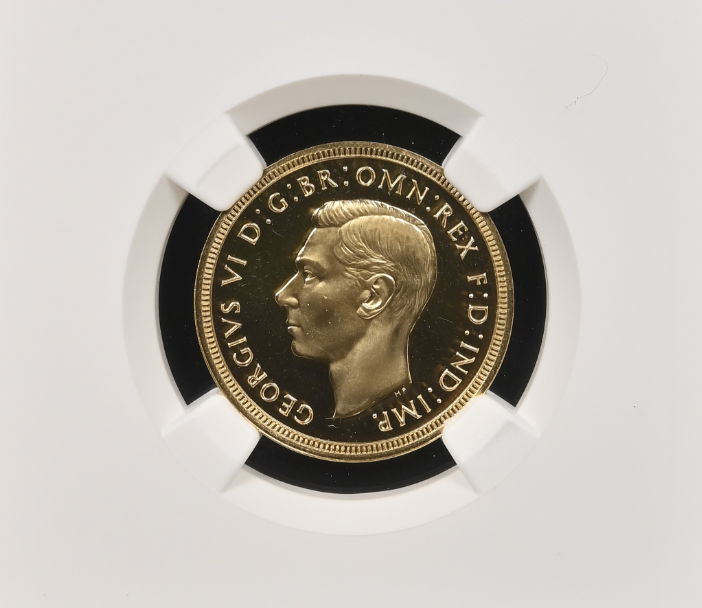
The obverse carries the bare-headed portrait of King George VI by British artist and engraver Thomas Humphrey Paget.
Paget had already been selected to create the intended portrait of Edward VIII before the abdication.
Following Edward’s departure, the Royal Mint urgently commissioned Paget to create a portrait of the new King.
The Royal Mint Museum records that he produced George VI’s portrait in little more than a month, describing the resulting design as technically outstanding.
His initials:
HP
appear beneath the King’s neck.
The portrait therefore provides another direct connection between the abandoned Edward VIII coinage and the George VI coinage that replaced it.
⸻
St George and the Dragon
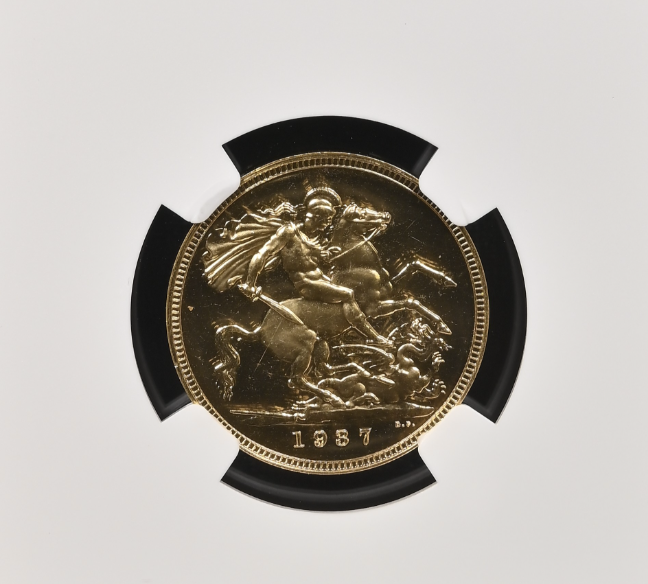
The reverse features Benedetto Pistrucci’s celebrated St George and the Dragon.
Originally created for the modern Sovereign in the nineteenth century, Pistrucci’s design became one of the most recognisable images in British numismatics.
St George appears mounted on horseback in the act of defeating the dragon, with the date:
1937
positioned beneath the design.
The Royal Mint confirms Benedetto Pistrucci as the reverse designer of the 1937 Sovereign.
The pairing of Pistrucci’s historic reverse with Paget’s newly created George VI portrait connects the established tradition of the Sovereign with the sudden beginning of a new reign.
⸻
The Distinctive Plain Edge
Another unusual feature of the 1937 Coronation Sovereigns is their:
Plain Edge
rather than the milled edge normally associated with Sovereign coinage.
The Royal Mint confirms that the four denominations within the 1937 Proof set were struck with plain edges.
The Royal Mint Museum goes further, explaining that because the coins did not conform to the specifications established in the Royal Proclamation, the plain-edge pieces are technically not legal tender.
This is an important distinction, and it means we should not describe this particular 1937 Proof Sovereign as UK legal tender or use the standard CGT-exemption wording applied to modern legal-tender Sovereigns.
That is why no CGT claim appears on this product page.
⸻
Struck in 22-Carat Gold
The 1937 George VI Proof Sovereign was struck to the traditional Sovereign gold standard of:
22 carat / 916.7 gold
The Royal Mint specifies a total weight of:
7.98g
and diameter of:
22.05mm.
This gives approximately:
7.32g of fine gold
or:
0.2354 troy ounces of fine gold
Its principal specifications are therefore:
Metal: Gold
Fineness: 916.7 / 22 carat
Weight: 7.98g
Fine Gold Content: approximately 7.32g / 0.2354 troy oz
Diameter: 22.05mm
Quality: Proof
Edge: Plain
⸻
Proof Coin Versus Circulating Sovereign
The distinction between this coin and an ordinary historic Sovereign is fundamental.
The 1937 George VI Sovereign was never produced for general circulation.
Instead, it was manufactured specifically as a Proof coin for the Coronation sets.
The Royal Mint’s Proof process involves specially prepared dies and blanks, with Proof coins struck multiple times at lower speed to achieve enhanced detail and carefully finished surfaces.
Its Proof-only production, limited Coronation issue, unusual plain edge and unique position as the only Sovereign to bear George VI’s portrait give the coin a clear numismatic significance beyond its underlying gold content.
⸻
A Historic British Numismatic Gold Coin
The 1937 George VI Proof Sovereign brings together a combination of characteristics rarely found on a single British gold coin:
- Created following the Edward VIII abdication crisis
- Struck specifically for George VI’s Coronation
- Issued within approximately 5,501 Gold Proof sets
- The only Sovereign to bear George VI’s portrait
- Humphrey Paget obverse
- Benedetto Pistrucci St George and the Dragon reverse
- Distinctive plain edge
- 22-carat gold
- NGC PF66+ Cameo certification
- NGC population of only 3 at PF66+ Cameo
- Only 8 NGC examples graded higher at the time of checking
It represents not simply a scarce Proof Sovereign but a tangible artefact from one of the most dramatic transitions in modern British monarchy.
Edward VIII’s Sovereign became the extraordinarily rare coinage that never was.
The George VI Sovereign became the coin that replaced it.
And the 1937 Coronation issue would ultimately become the only Sovereign ever to carry George VI’s portrait.
⸻
Image Information
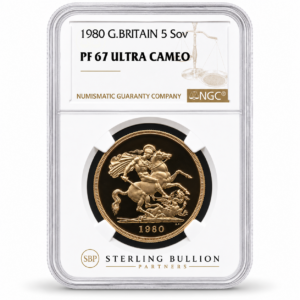
The slab images shown are digitally produced representations for presentation purposes, with certification numbers and barcodes omitted. The close-up coin photographs show the actual coin offered for sale.
⸻
Why Buy from Sterling Bullion Partners?
Every certified coin offered by Sterling Bullion Partners is carefully selected for its quality, authenticity and collector appeal.
When purchasing from Sterling Bullion Partners, you benefit from:
- Carefully selected certified coins
- Independently authenticated and professionally graded examples
- Detailed close-up photographs of the actual coin offered for sale
- Fully insured UK delivery
- Secure protective packaging
- Experienced customer support
- A UK precious metals dealer committed to accuracy and transparency
With its direct connection to the Edward VIII abdication crisis, limited Coronation issue, unique status as the only Sovereign to bear George VI’s portrait and an NGC PF66+ Cameo population of just 3 at the time of checking, the 1937 George VI Gold Proof Sovereign represents an exceptional certified example of twentieth-century British numismatic history.
⸻
Related Guides
You may also find these Sterling Bullion Partners guides useful: